Category: Youth Fitness

  • Six Tips to Snap Out of a Fitness Rut

    Six Tips to Snap Out of a Fitness Rut

    No matter what the fitness level of an individual, we can all get stuck in a rut from time to time.  There are lots of different things that can slow us down, but fortunately there are also lots of ways to spark your workouts again.

    Variety is the spice of life and is a great way to improve your fitness outlook.  People should try to change up the way they exercise now and then to avoid plateaus, boredom and just to give muscles a break from being used the same way over and over.

    Here’s a six-pack of tips to snap out of a fitness rut:

    Keep a workout log – This is a workout must.  If you log your workouts it will allow you to follow a plan, chart your progress and be able to look back over the workouts and feel good about yourself.  It can help you adjust better as you go along – determine what’s working and what isn’t – and also serve as motivation.

    Seek variety – Seek ways to cross train and vary the number of reps you do and how you do them to change things up.  Mixing different types of interval training is a great way to keep your cardio workouts more enjoyable and challenging.

    When it comes to running and/or walking, change the course you exercise on.  A change of scenery could help re-energize you.

    If you train mostly on a treadmill, you can still change things up.  Switch the pre-programmed workout you do, or change surroundings by doing things such as playing different music or what you watch on TV if one is near your machine.

    Set goals – It’s important to set a long-term goal, such as run a 5K race or lose 15 pounds.  People should also set short-term goals, such as simply to make sure they work out three times in the coming week or that they do 20-30 minutes of cardio at least twice a week.

    Find a training partner – A reliable family member or friend to work out with can help make it a lot more fun and also help keep you more motivated and accountable.

    Schedule time for fitness – We’re careful to schedule and keep appointments with the doctor or auto mechanic.  Shouldn’t finding time to exercise also be something important enough to block off time on our weekly calendar for?

    Buy something new – If you’re stuck in a rut, perhaps buying a new piece of fitness equipment for your home gym or new workout clothes will help motivate you.  Reward yourself for working to stay fit!  Knowing you have the new item should make you want to use it for exercise.

  • Children Are Fat, And Getting FATTER!

    Children Are Fat, And Getting FATTER!

    Back-to-school season is usually a time for parents to begin worrying about whether Johnny and Jane are being adequately taught to read, write and do math.  But recent studies tell parents they should be just as concerned about how their children are developing in places other than the brain.  To put it bluntly, our kids are fat and getting fatter, and less and less physically active.  Research shows that a high percentage of overweight children carry their excess pounds into adulthood, putting them at risk of premature death, chronic disease and disability.  Doctors are already seeing a rise in Type 2 diabetes, high blood pressure,  and cholesterol in children.  Dr. Andrew Pipe, director of the Prevention and Rehabilitation Center at the University of Ottawa Heart Institute, and a leading expert in this field, calls the rise in obesity among children “nothing short of a public health disaster.”

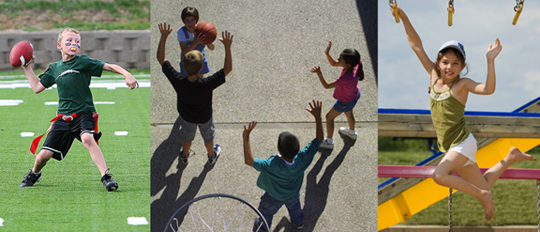
    Even children and youth who are not overweight may be at risk due to physical inactivity.  The Canadian Fitness and Lifestyle Research Institute has determined that three out of five Canadian children (aged 5 to 17) are not active enough for optimal growth and development.  That means they are doing less than it takes to walk an hour a day plus half an hour of vigorous activity like soccer, hockey, dance or martial arts — hardly a large amount for young, growing bodies.  There are three major reasons for this trend.  First, our kids are too sedentary.  They spend too much time on the computer and watching television, which has been linked to obesity.

    Second, they are not active enough.  They don’t walk or bike to school any more, they ride the bus.  When they are in school, they don’t spend enough time in the gym or on the playground.  At home, concerns about safety keep many parents from sending their children outside to play.  Last, children eat too much junk food, and not enough healthy foods.

    The bottom line is we’re not doing our children any favors.  In fact, we’re playing Russian roulette with their lives.  What can we do?  Getting our children to eat properly and be physically active is not rocket science, but it is not as easily accomplished as we might think.  Recent guidelines recommend that inactive children and youth start increasing the time they currently spend being physically active by at least 30 minutes a day.  This should include a combination of both moderate activity, such as walking and biking, and vigorous activity, such as running and playing soccer.

    The Center of Disease Control has published basic guidelines for maintaining an active lifestyle for children.  These guidelines include:

    • Children and adolescents should do 60 minutes (1 hour) or more of physical activity each day.
    • Encourage your child to participate in activities that are age-appropriate, enjoyable and offer variety.
    • Aerobic activity should make up most of your child’s 60 or more minutes of physical activity each day. This can include either moderate-intensity aerobic activity, such as brisk walking, or vigorous-intensity activity, such as running. Be sure to include vigorous-intensity aerobic activity on at least 3 days per week.
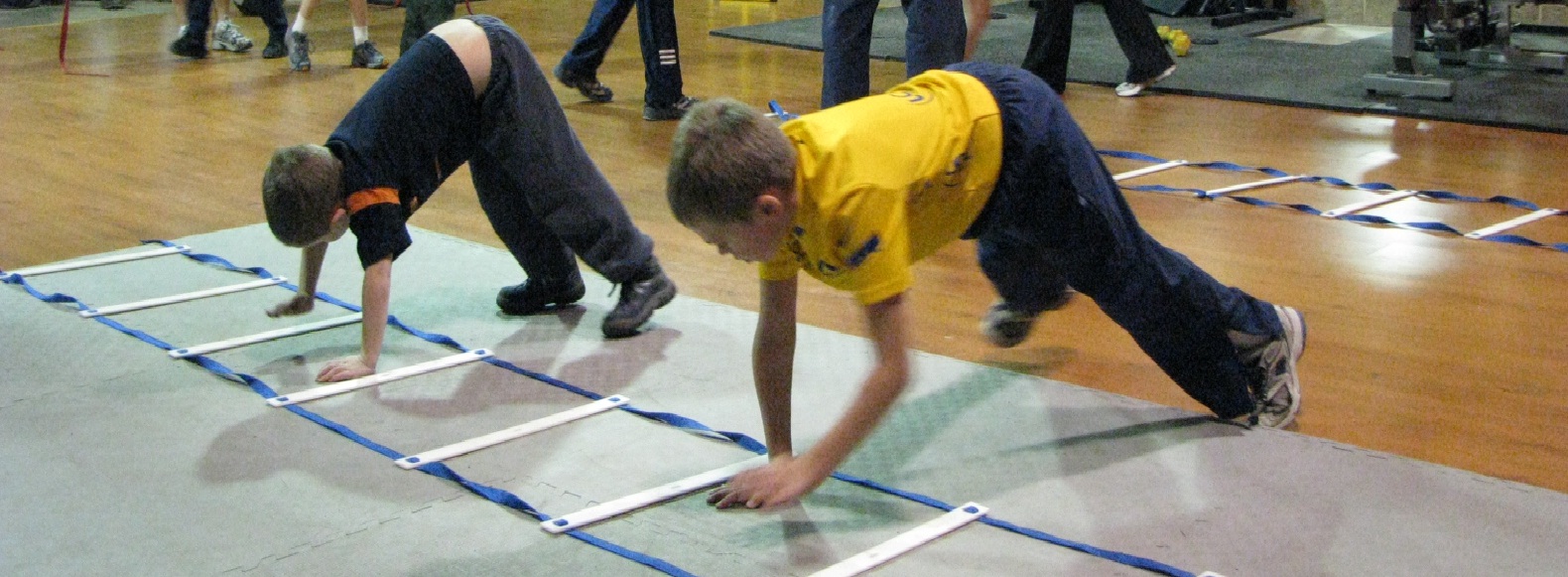
    • Include muscle strengthening activities, such as gymnastics or push-ups, at least 3 days per week as part of your child’s 60 or more minutes.
    • Include bone strengthening activities, such as jumping rope or running, at least 3 days per week as part of your child’s 60 or more minutes.

    Over several months, children should try to build up to at least 90 minutes more physical activity per day.  In time, this may help kids come to accept that physical activity is as important to protecting their health as wearing a seatbelt, and as routine as brushing their teeth.  For parents and care providers, it’s mostly common sense.  Enroll your children in their favorite sport, or try a new one.  Turn off the TV and computer and take them outside.  Hide the video games.  Go for a walk, a bike ride, a hike — anything that gets everyone moving.  Children learn what they see, and parents are their most important role models when it comes to being physically active.

    Recently, the Alberta, Canada government said it would make daily gym class mandatory in all elementary and secondary schools.  That’s something that all school districts should emulate.  As well, educators and parents need to understand that opportunities for physical activity should not end with a 40-minute gym class.  Some schools, in fact, have already learned that lesson.  Secord Elementary School in Toronto has received national recognition for its physical education program which offers students 150 minutes of activity every week.  Physical education is scheduled daily into the timetable of every class.  Use is also made of a multi-purpose room and a gym at a local community center.  The school also takes advantage of other community facilities, such as skating at the local outdoor arena and running at a local park.

    These efforts are welcome, but in isolation they won’t solve the overall problem.  Parents and schools alone can’t end the growing epidemic of childhood obesity and inactivity.  What is needed is for everyone who has an impact on children’s lives to play their part in a sustained, co-ordinated effort.  Parents, educators, health professionals, local, state, and federal governments — even fast food producers — need to think hard about what we’re doing to our children, or allowing them to do to themselves.

    Their lives literally depend on it.

  • Eight Secrets To Gain Muscle

    Eight Secrets To Gain Muscle

    Losing weight, means you will look good in your clothes.   Exercising and gaining muscle means you will look good NAKED!

    If you do not have enough muscle, losing your body fat will probably not produce the results you would like.   Without building muscle, having the sculpted looks of the fitness posters you hung up (you know you did!!!) will become difficult.  Spending hours on the treadmill doing cardio is not enough!   By following these  eight simple secrets, you can have that body you want and feel great about it!

    These are the secrets to build more muscle and look fantastic:

    1. Lift Weights
    Long-continued efforts, such as distance running or cycling, are great for burning fat but do not make your muscles grow.  Take a look at the physique of bodybuilders, sprinters, and football players.  If you want to grow,  you have to have some iron in your life.

    2. Lift More Weight
    To build muscle, you have to work over your limit.   But be careful, you don’t want to go nuts and hurt yourself.  Push yourself to lift more, but know your limitations.  Always keep proper posture and good form.

    3. Volume
    Need more weight or more reps?  Both!  Total volume is weight lifted times the number of repetitions, and that is the value that you have to increase.  If you do only three reps with a lot of weight, your strength will increase, but not the size of the muscles.

    4. Short and Intense
    Spending two hours in the gym is a bad idea. Your muscles store a finite amount energy as glycogen. If you run out, you’ll never get to achieve maximum volume, because you’ve run out of strength.  You have to take the muscle to the limit with the energy you have.  The session should not last more than 50 minutes.

    5. Measurement and Progress
    Muscles quickly become accustomed to the day to day workout routine.  Therefore, it is important to keep a diary of your training and progress.  Also, you should constantly progress in your weight lifted and volume over time.  This will continue to stimulate muscle growth.

    6. Rest
    Muscles do not grow in the gym, they grow while you sleep.  If you do not schedule rest days between training, and not get enough sleep, your muscle fibers do not regenerate and grow properly.  Having problems lifting more than in the previous session?  Your muscles probably have not recovered fully.  Go home and come back tomorrow or do a different activity.  As they say in California, Go Hard or Go Home.

    7. Eat
    We’re talking about gaining muscle, not losing weight. You have to eat more, but without going too far over your daily requirements based on your activitiy level. To build more muscle, you need the bricks, i.e. more protein. Try not to focus solely proteins. If you do not eat enough carbohydrates, the body breaks down protein for use as energy, and does not reach the muscles.  Eat carbohydrates that are absorbed slowly, like vegetables, brown rice and lots of greens.  Do not forget quality fats!   Don’t go nuts, but they need to be part of a balanced diet.

    8. Avoid Stress
    Growth hormone is essential to increase muscle size.  But if you’re stressed, your body is flooded with cortisoll, a hormone that puts us on alert and decreases growth hormone and testosterone levels.  Stress also lowers the immune system, increasing the risk of falling ill.  Everyone has stress, but you need to find an outlet.

    So, what are you waiting for?  Get out there, follow these steps, and LOOK BETTER NAKED!

  • Top Fitness Questions and Answers

    Top Fitness Questions and Answers

    As a certified personal trainer part of my commitment to clients is consulting with them. This includes answering their many fitness and diet questions. Needless to say, I get asked a lot of questions. And, there are several questions that seem to be on almost everyone’s minds. The answers to these top 8 inquiries can help most anyone get a jump start on reaching their weight loss and fitness goals. So, here are some of the top fitness questions and their answers.

    1. I want to tone and tighten my legs (or stomach, or arms, etc). What exercises can I do to lose fat there and get them toned?
    Answer: You can’t spot reduce. It is necessary for you to reduce the fat in your trouble area before you will see big results from your strength training exercises. You must burn calories and fat through cardiovascular activities. This includes such things as walking, jogging, step aerobics, jumping rope, swimming etc. But, while cardio is critical you should also include strength training exercises to help build the muscles in your trouble areas simultaneously.

    2. I really want to workout and get in shape, but I just don’t have the time. What should I do?
    Answer: You are not alone. One of the top reasons people give for not working out is lack of time. The first step is to realize that it’s not that you don’t have the time, but that you are not making it a priority in your schedule. What people don’t realize is that it doesn’t take a huge time commitment to reap the many rewards of regular exercise. Many people think that if they can’t workout several hours a week, then they might as well not workout at all. But, exercising even just a couple of days a week is far better than not exercising at all. The key is finding a truly effective and efficient workout plan.

    3. What is the best fitness program for losing weight?
    Answer: The key to a successful program is that it is comprehensive and includes the necessary pieces. There are three major components of a good weight loss program: cardio, strength training and, stretching. It’s equally important to include all three components. For example, you could do cardio 3 times per week, strength training twice per week and stretch before and after every workout.

    4. I have hit a plateau and can’t seem to get the scale to budge (or can’t get any stronger). Can you help me?
    Answer: The key to breaking through a plateau is change. One of the best techniques for overcoming a plateau is Interval Training.  This is a type of training that includes bursts of high intensity periods followed by lower intensity recovery times. You’ll also want to change your workout routine at least every 4-6 weeks.

    5. What size weights should I train with and how many reps should I complete?
    Answer: There’s no one size fits all weight size that is best. The size of weight you use depends on your goals, skills, past fitness experience, etc. A good rule of thumb is to start with about 70% maximum resistance with 8-12 reps and 1-3 sets. To determine your specific 70% maximum size, you must first determine the maximum amount of weight you can lift. However, it’s typically not recommended that beginners attempt to lift their maximum amount of weight for safety reasons. So, another simpler option is to choose a weight size that provides fatigue after the 8th – 12th rep is completed.

    6. Is it bad for your body to workout some of the same muscle groups daily?
    Answer: Typically you should allow your muscle to rest about 48 hours before working it again. This is the safest approach and also the most efficient approach for improving strength. It will help you increase hypertrophy and strength more effectively.

    7. How often should I stretch and should I stretch before or after working out?
    Answer: Actually, it’s best to stretch both times. If you have the time, your body will really benefit from stretching both before you start exercising and again after your workout. At the very least, be sure to stretch after you have completed your workout. As far as frequency, even if you don’t workout every day it is very beneficial to include a stretching routine daily.

    8. How can I workout at home because I don’t belong to a gym?
    Answer: There are many, many options for strength training and cardio workouts that don’t require a trip to the gym. If you have dumbbells, a resistance band, or an exercise stability ball, there are literally hundreds of exercises that you can do at home. With these exercises you can increase your muscular strength, muscular endurance plus of course get a more defined look in your physical appearance. For cardio workouts you can simply walk outside or at an indoor location, stair climb, jumping jacks, etc.

    For more detailed information on these questions, and to submit other questions, please use the Contact Us form located at http://www.totalhumanperformance.net/about-us/contact-us/

  • Cycling For Weight Loss

    Cycling For Weight Loss

    Losing weight cycling is a fun and enjoyable way to improve your health and to make you feel better. Pedaling down a rural road or through a city park rouses your spirit and awakens your senses.

    One of the most powerful arguments for encouraging more people to cycle is that it leads to considerable improvements in public health.   A regular routine to lose weight cycling can reduce the risk of serious conditions such as heart disease, high blood pressure and obesity.

    Cycling is also a good way to improve your balance and co-ordination.   They say once you learn to ride a bike you never forget and that is true. The motion and balance come back to you very quickly. If you’re looking to get outside more often and improve your fitness, biking is the answer.  It enhances your general well-being and promotes mental health. Beyond the health benefits, it’s an enjoyable way to get around.

    Getting on your cycling bike regularly can also be an effective form of aerobic exercise.  A recent study found that even a small amount of cycling for weight loss can lead to a significant fitness gain. Aerobic fitness was boosted by 11 percent after just 6 weeks of cycling short distances four times a week. 

    Cycling can have positive effects on how we feel too.  Moderate exercise has been found to reduce levels of stress and depression, improve mood and raise self esteem. It has also been found, in some instances, to relieve symptoms of PMS.  Benefits in strength and agility can come from regular cycling also. There are no real-age barriers to cycling and people at almost any fitness level can begin slowly and gently if necessary.

    Physically active older people can reduce the rate of hip fractures with regular cycling exercise. Most of the negative things we associate with aging aren’t a result of chronological aging but rather a lack of physical activity.  Cycling is as gently on your body as a sport can be. It is a non weight bearing exercise so it’s easy on your joints, even the achy ones. It can be a wonderful way to get exercise and lose weight without pain.

    If your looking to lose weight cycling, jump on your bike and leave your worries and stress at home. Enjoy your ride. Just think you could be at work instead.

    If you are interested in starting a weight loss plan, or interested in cycling basics, please contact Total Human Performance for a free consultation by using our contact form located at http://www.totalhumanperformance.net/about-us/contact-us/ today!

  • Choosing a Fitness Trainer and Nutrition Consultant

    Choosing a Fitness Trainer and Nutrition Consultant

    A personal fitness trainer and nutrition consultant can help you enter a race where there’s no engraved cup or money award at the finish line. Unlike the Thoroughbreds racing at the local park, you will be running for your very life instead. Fitness and nutrition are the keys to a quality long life.

    Racing for Fitness

    Almost 60% of people in the United States are overweight or obese. The consequences of having too much fat on your body can be severe. Obesity is a major cause of many serious illnesses including Type 2 diabetes, coronary heart disease, high blood pressure and even certain forms of cancer.

    It’s hard to maintain a fitness routine on your own. On top of that you are bombarded with advertisements selling unhealthy food and gadgets and inventions that actually result in less physical activity. The perfect examples are kids playing electronic games for hours instead of baseball or soccer. There are bigger and better computers and TVs promoting lifestyles with little exercise time included.

    Sedentary lifestyles are not good for the body, and neither is junk food. But everyone lives extremely busy lives and fitness and nutrition often take a low priority. A personal fitness trainer and nutrition consultant can help you rearrange your priorities so you place your health top of the list.

    When you are young, it’s easy to believe good health is forever.  But as you age, the truth is slowly revealed. Metabolisms slow naturally. Fat accumulates after years of eating meals with little nutritional value.

    Free radicals form unimpeded because the diet has consistently lack antioxidants found in fruits and vegetables. Other diseases eventually take root. For example, lack of exercise increases the chances of developing osteoporosis.

    Finding Your Stride

    A personal fitness trainer and nutrition consultant can assist you in a number of ways beginning with an assessment of your current fitness level. A personal trainer will work with to establish mutual goals including measures of progress such as weight loss or inches loss.

    Personal fitness and nutrition consultation includes the following:

    • Evaluating current dietary habits and making necessary changes
    • Calculating the body mass index (BMI)
    • Establishing an exercise routine that fits your lifestyle
    • Develop a strength training program
    • Tracking progress and making necessary adjustments as you progress

    Using a personal fitness trainer and nutrition consultant can help you stay motivated as you begin the race for your life. The quality of your life in your senior years is directly related to the level of fitness you maintain in your younger years. It becomes clearer with each medical study that problems associated with aging are as much a consequence of poor nutrition as they are of the aging process itself.

    Utilizing the services of a personal fitness trainer and nutrition consultant only makes sense if you’re ready to get serious about your health. Racing for the grand prize of good health means finding your “fitness stride”.

    You don’t have to work out 8 hours a day to stay fit and healthy. You do have to exercise regularly and watch what you eat. A personal fitness trainer and nutrition consultant can be the key to your success.

    To start your adventure on the right path to fitness, please contact Total Human Performance for a free fitness consultation by using our contact form located at http://www.totalhumanperformance.net/about-us/contact-us/ today!

  • Fitness for the Average Golfer

    Fitness for the Average Golfer

    Although some professional golfers don’t look like athletes, the fact remains that golfers are athletes.  These days, a more careful look at the professional golf ranks will reveal many well-conditioned people.  Such conditioning is needed to perform consistently well at a high level.  After all, it isn’t often noted, but the golf swing is an intensely athletic motion.

    Given that fact, even the most casual golfer who incorporates the simplest of exercises can help himself or herself shave strokes off the handicap, and maybe a few inches off the waist.

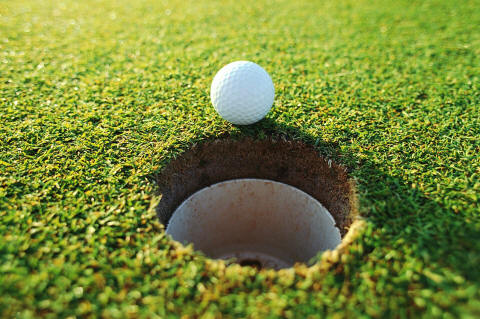
    A golf analysis company based in Germany, Golf Biodynamics, conducted a study using twenty-eight weekend golfers. They were introduced to an eight-week, “five-column” workout plan.  The five columns were different sets of exercises that concentrated on five different fitness-related aspects of golf – coordination, balance, strength, the swing itself, and flexibility.

    The results of the study were overwhelming.  The group as a whole experienced an increase in upper-body rotation and an 80 percent gain in upper-body strength.  The stability of their hip rotation also increased, resulting in a more controlled swing, and their collective clubhead speed increased by 9.4 percent.  Think they’re having fun knocking their drives past their playing partners now?

    As with any workout regimen, the older a person gets, the harder it is to see results.  Younger golfers and women, all with lower handicaps, saw more immediate results on the golf course.  But seniors and bogey golfers can take heart; the sport is a game of inches.  The slightest change any golfer makes can have a significant impact in his or her game, and will help avoid back pain, knee pain, and other health problems many middle-aged to senior golfers experience.

    No matter the age or skill level, a complex golf fitness program can keep golfers swinging away and enjoying the game for many years.  If you are interested in starting a fitness progam today, contact Total Human Performance today at  http://www.totalhumanperformance.net/about-us/contact-us/

  • Introducing Your Child To Physical Activity And Fitness

    Introducing Your Child To Physical Activity And Fitness

    There are some general rules when introducing fitness into a child’s life, and there is also a lot of misinformation.

    For instance, the whole “weightlifting can damage growth plates” idea that is now “common knowledge” is very, very misleading.  In fact, it is inaccurate.  That myth is based on a Japanese study in the 1940’s that used children working in a dirty mine as their sample! Yes, too much weightlifting can cause damage, but under professional supervision, strength training can be a safer environment than competitive sports.

    Exercise at a young age, including strength training, is a vital part of a child’s physical, emotional, and mental development.  In the book “The new Science of Exercise and the Brain”, the author talks about how exercise aids brain development and learning by creating new neurons in the brain.  This is revolutionary information that will radically transform our school system, hopefully sooner than later.

    In general, it is best to introduce physical activity in a non-competitive setting first.  This decreases the risk of injury and will prevent children who are poor performers in sports from getting turned off to physical activity in general.  It also provides more control over the environment, ensuring a positive first experience with organized physical activity. Unfortunately, many schools present their children only two options: sports or inactivity.  Fitness can teach them to compete with themselves, create and achieve goals, and self-empowerment, all while building self-esteem.  When a child does not perform well at a sport or sports in general, competitive sports lowers self-esteem.  Fitness is a great alternative.

    Most research indicates that 5 years old is an appropriate age for MOST children to begin some type of exercise.  Again, under expert supervision, they can start as early as 3 years old with certain basic activities.   Issues with damaging a child’s body are decreased greatly with the concept of micro-progression, in which the child starts with very easy “control exercises” and very slowly progresses from there.  From a physiological perspective, where the force comes from (weights, water, a ball or sport, their own body etc.) is irrelevant in and of itself. Properly prescribing and then progressing forces slowly is the key to successful adaptation.

    There are many ways in which exercise and sports can teach teamwork and emotional development.   Partner dancing has been taught in some school systems to utilize exercise for social development of pre-teens.  While dancing, new neurons are created, which are then utilized for navigating a socially challenging situation (dancing with a partner of the opposite sex.  EWWW!).

    Contrary to popular belief, weightlifting can be a very valuable tool to introduce to children even before sports. Under the correct supervision, the child can practice controlling weights that are well within their skill and strength level, instead of pushing their limits in a competitive setting.  This controlled environment is safer then sports and can then decrease the risk of injury when they enter that competitive environment.

    Unfortunately, the government, the media, and popular culture dismiss fitness and physical activity for young students as a luxury. Nothing could be further from the truth.  Physical fitness is a sure way to help your child grow socially, emotionally, physically, and intellectually, all while teaching them how to overcome challenges, work together, and achieve goals.  Exercise is a tremendous vehicle for self-empowerment and self-mastery, and is an essential element of education that should be brought back to the foreground of our national conscience.

    To start your child on the right path to fitness, please contact Total Human Performance for a free consultation by using our contact form located at http://www.totalhumanperformance.net/about-us/contact-us/ today!

  • Is Weight Training Safe For Today’s Youth?

    Is Weight Training Safe For Today’s Youth?

    Exercise and conditioning, when executed safely and correctly, delivers many benefits to today’s youth.   However, there are also risks associated with training the youth population.   These risks can all be avoided by following some basic guidelines, and a training plan tailored to the child or adolescent.  Below you will find that there are both benefits and risks associated with youth fitness.  This article also summarizes the safety of training for today’s youth. Finally, the article discusses guidelines for proper programming in a youth training plan.

    Benefits

    Zatsiorsky, in the Science and Practice of Strength Training, states that there are many benefits that can be obtained by children and adolescents by adapting a strength training program.  He mentions that there are many general health benefits that can be obtained. The youth that participates in exercise can experience improved sports performance due to increased flexibility, increased strength, increased endurance, and increased power output. Injury prevention is another benefit of exercise, as well as weight control.

    The American Council of Exercise has published several benefits as well.  While most of the benefits are physical or physiological, several are also psychological.   For example, ACE states that a youth participating in exercise/training can experience improved muscular fitness, bone mineral density, body composition, motor fitness performance and injury resistance.   Also, from a psychological aspect, they can experience increased self esteem, mental discipline and improved socialization skills.

    The International Sport Sciences Association (ISSA) states in their Youth Fitness Trainer certification materials that “exercise is important during growth.  It contributes to a better-developed functional capacity and can enhance neural and musculoskeletal development.  Exercise habits established during childhood and adolescence will carry over to adulthood. We are in the midst of an obesity epidemic in this country. Many studies show that overweight children become overweight or obese adults. Exercise habits established during the school years may help prevent a life-long problem with weight control.”

    The International Youth Conditioning Association in their book, Development Essentials, also gives several benefits to children and adolescents being active in a training or exercise program.   These benefits include muscle endurance, injury prevention, and muscle growth.  There are also several tissue adaptations that take place, such as strength, weight, and thickness increases in tendons, ligaments, and cartilage.

    Risks

    Along with the benefits of a solid exercise program for children and adolescents, there are also potential risks, including injury.  The IYCA states that a study reported the data from 1991-1996 on injuries associated with weightlifting in participants 21 years old or younger. In this time period, there were approximately 20940-26120 injuries reported.  “Most of the injuries were considered preventable due to a cause of improper technique, attempting maximal lifts, and unsupervised training”. Zatsiorsky gives improper exercise technique, improper spotting, and incorrect equipment use/fit as risks and paths to injury.  The IYCA and ISSA also states that children and adolescents should avoid maximal lifts and efforts as well.  Everyone seems to agree that injuries are a risk, but can be avoided. 

    Most risks can be avoided by following a set of guidelines during any training activities.  The IYCA gives the following guide in their book, Developmental Essentials:

    1. Planning of training programs must take into consideration the level of physical maturation of the athlete.

    2. In comparison to the expert lifters, novice weightlifters tend to use techniques that predispose the athlete to injury.  Proper technique should be emphasized at all times.

    3. Avoid maximal loads or large increases in loading or activity in developing athletes.

    4. Horseplay should never be tolerated in the weight room.

    5. Supervision by a qualified instructor must be provided at all times.

    Another risk that the IYCA and the ISSA point out is the existence of any muscular or postural imbalances in the participant.   Any imbalances can later hinder improvements in performance and may cause injury.  Even further, as a trainer, the failure to recognize these imbalances and correcting them can increase these risks.

    Safety

    Safety has been a hot topic in training children and adolescents ever since training youths has become more popular.  There are many myths and fallacies associated with the risks listed above.   One fallacy that ACE points out is that many people think that training will “stunt growth” of their children.  This is definitely not true.  This fallacy stems from the possibility of damaging the epiphyseal growth places during heavy training.  The NSCA states that “Although children and adolescents are susceptible to injury to the growth cartilage, the potential for this type of injury may be less in a preadolescent child than in an adolescent because the growth cartilage may actually be stronger and more resistant to sheering type forces in younger children.  To date, injury to the growth cartilage has not been reported in any prospective youth resistance training research study. Furthermore, there is no evidence to suggest that resistance training will negatively impact growth and maturation during childhood and adolescence”.

    As pointed out above, and by the IYCA, ISSA, and by Zatsiorsky, by using a long term program designed appropriately for the child or adolescent, using proper technique, adding variety, allowing for individual characteristics, and using suitable training load increases we all but eliminate the risks associated with training.

    The ACE stated in their article that “In fact, all of the major fitness and medical organizations in the U.S. recommend strength training for youth, assuming that basic guidelines are adhered to and that appropriate leadership is present. And about the question of age, children can begin to train with weights as soon as they are able to accept and follow directions—usually around the age of seven or eight”.

    The following is directly from the NSCA’s position on youth strength training:

    The National Strength and Conditioning Association (NSCA) recognizes  and supports the premise that many of the benefits associated with adult resistance training programs are attainable by children and adolescents who follow age-specific resistance training guidelines.

    It is the current position of the NSCA that:

    1. A properly designed and supervised resistance training program is relatively safe for youth.

    2. A properly designed and supervised resistance training program can enhance the muscular strength and power of youth.

    3. A properly designed and supervised resistance training program can improve the cardiovascular risk profile of youth.

    4. A properly designed and supervised resistance training program can improve motor skill performance and may contribute to enhanced sports performance of youth.

    5. A properly designed and supervised resistance training program can increase a young athlete’s resistance to sports related injuries.

    6. A properly designed and supervised resistance training program can help improve the psychosocial well-being of youth.

    7. A properly designed and supervised resistance training program can help promote and develop exercise habits during childhood and adolescence.

    Guidelines

    The ISSA, IYCA, and NSCA all provide a set of guidelines that lead to programming a safe, fun, and effective training plan for a child or adolescent.   They all seem to echo the same tune.  The one that seems easiest to remember, and least specific, is the ISSA’s “Seventeen Principles of Training” from their Youth Fitness Trainer certification manual.  The guidelines are listed below.

    Athletes benefit the most from their program if they follow the Seventeen Principles of Training. These principles are a guide to gradual, long-lasting, injury-free fitness development that leads to improved performance with the smallest risk of injury. They also serve as a guide to gradual and long-lasting fitness development.

    Principles of Training

    1. Train the way you want your body to change.
    2. Eat well-balanced, high performance meals.
    3. Establish realistic goals.
    4. Have a workout plan.
    5. Train all year round.
    6. Get in shape gradually.
    7. Don’t train when you are ill or seriously injured.
    8. Train first for volume (more repetitions) and only later for intensity (more weight or resistance).
    9. Listen to your body. Know when to rest and slow down.
    10. Vary volume and intensity of workouts.
    11. Work on weaknesses, not just strengths.
    12. Train systematically.
    13. Warm-up and cool-down.
    14. Train the mind. Learn to focus and delete extraneous “information” as you train.
    15. Listen to “Coach Pain.” Do not be a hero by trying to continue workouts when you know you should not.
    16. Become informed about the physiology of your body. Learn all you can about exercise and the effects of training.
    17. Have Fun! Keep the exercise program in its proper perspective.

    Resources:

    Developmental Essentials – The Foundations of Youth Conditioning   Edited by Dr. Kwame Brown – International Youth Conditioning Association, Inc. 2007.

    Science and Practice of Strength Training, Second Edition – Vladimir Zatiorsky and William J. Kraemer – Human Kinetics, May 2006 pp 191-213.

    YOUTH RESISTANCE TRAINING: UPDATED POSITION STATEMENT PAPER FROM THE NATIONAL STRENGTH AND CONDITIONING ASSOCIATION – NATIONAL STRENGTH AND CONDITIONING ASSOCIATION, 2009.

    Youth Fitness Trainer, Second Edition – Dr. Thomas D. Fahey, EdD – ISSA, 2006.

    Strength Training for Kids: A Guide for Parents and Teachers – American Council on Exercise, 2010 –  http://www.acefitness.org/fitfacts/fitfacts_display.aspx?itemid=2682
  • Kids Are The Same As Adults, Right?

    Kids Are The Same As Adults, Right?

    When designing an exercise program for a child, it is not as simple as applying the same principles you would to designing an adult program.  The same rules do not apply.   The challenges may appear to be the same, but they are very different.  At the same time, you cannot apply the same fitness assessments to a child that you would give an adult.   You need to assess the child in the light of the entire growth process.    Knowing that the child and adult are very different, both mentally and physically, you need to take several factors into consideration when assessing clients and designing their exercise programs. 

    When designing a program for a child, you have to take where they are in the growth process into consideration.   As a child continues to develop, the physiological processes in the body continue to develop as well.   The muscular, skeletal and nervous systems continue to develop as well during the process.  However, in an adult, these changes have already been made, and the body has reached its point of homeostasis, and has reached a point of “balance”.  

    Children have immature regulatory systems and temperature control mechanisms compared to an adult.  Temperature control of the cardiovascular system is critical for the exercising participant and is more of a challenge for children and adolescents. Their surface area-to-mass ratio is larger than adults which allows for a greater heat exchange by convection and radiation.  When designing an exercise program, the trainer needs to keep intensity in mind since children do not sweat as much as adults due to low surface area of the skin compared to adults.   They can acclimate to the heat, but it takes them longer than adults. The tendency is to try to do too much too soon. It is recommended to postpone or recommend strenuous activity when heat and humidity are high and making sure plenty of fluids are ingested before, during and after exercise. Thirst is not an accurate guide for fluid need.   As their body temperature increases, they can become susceptible to heat exhaustion easier than adults.  Children should not be exposed to hot environments (sauna, hot rooms, etc.) for extended periods due to this.

    Children have immature nervous systems compared to the adult counterpart.  Myelination of the nerves is not complete until the age of sexual maturity.  The child cannot be expected to have high levels of skill, power, and strength until he or she has reached their neural maturity as well.  They simply cannot elicit the same response to training or reach the same skill levels as adults.

    There are also several differences in the circulatory system between children and adults.  As children get older and progress into adolescence, their heart rate progressively declines.  However, at childhood, it is normal for a child to have a higher heart rate than an adult if they are performing the same types of exercise.  This makes estimation of maximal heart rate by set equations such as 220-age somewhat inaccurate for children and adolescents until the late teenage years.  It also means unless there are signs of stress or duress, there is no cause for concern for heart rate values greater than 200 bpm. Healthy individuals should be able to exercise for several minutes at maximal heart rates. In fact, because VO2 max (the greatest amount of oxygen that can be inhaled during aerobic exercise) is relative to the individual’s body weight, VO2 max values are as high as or higher than most adults. Heart rate will return to resting values quicker in children and adolescents than adults.  Their maximum heart rate and target heart rates lower due to aging as well.  The resting and during exercise systolic blood pressure rises progressively particularly during puberty reaching adult values soon after the growth spurt.  Diastolic pressure in both adults and children show very little derivation.   When designing aerobic programs for children, you have to take these heart rate differences in consideration.  

    Exercise capacity also increases gradually throughout childhood.  Increases/improvements in endurance capacity occur because of increased muscle mass and enhanced oxygen transport and metabolic capacities.  Children will experience a decreased heart rate with endurance training, but not to the same extent as adults do.  Children as they get older will be able to handle more activity as they mature due to the increase of capacity, and the decreased heart rate.

    When you compare children to adults, the children have immature skeletal systems and less muscle mass.  The immature skeletal system causes fragile bone growth (epiphyseal) centers which when put under very  heavy stress, can fracture, causing injury to the growth plates.  Very young children should avoid very heavy and strenuous resistance training.  This does not mean that all children should avoid resistance training.  Trainers, parents, and the children should be responsible enough to not allow maximal effort exercises, and practice proper form and technique to avoid these types of injuries.  One of the most promising benefits of strength training may be increased bone mass.  Bone mass continues to increase throughout growth and development, but a peak in bone mass is reached at a young adult age.   Attaining a higher peak bone mass as a young adult may delay the age at which a loss of bone from aging occurs. A loss of bone later in life, especially among menopausal women, can lead to osteoporosis, causing bones to become increasingly porous, brittle and fragile.

    As mentioned above, the child contains much less muscle mass than adults.  The muscle in adults is stronger as well.   Again, the very young should avoid heavy and strenuous resistance training to avoid injury.  It has been shown that heavy resistance training will not provide as much value in very young children as in older children.   Gains from strength training for preadolescents are generally attributed to neural adaptations and motor learning, rather than circulating androgens. Muscle hypertrophy, or an increase in the cross-sectional area of a muscle, is not usually detected in children as a result of training. Since muscle size has been correlated with strength, studies indicating no increase in muscle hypertrophy implied that strength training was ineffective in younger participants.  During the first seven years there is steady growth of the muscles, followed by a slowing trend preceding puberty. 

    There is also much less hormonal activity in children than adults.  Children have very low testosterone levels compared to adults.   The amount of testosterone in the child increases along with puberty and levels off slowly after puberty ends.   During the time of puberty would be the best time to increase strength training and hypertrophy work due to the increasing testosterone and other hormonal changes.

    Adults and children also have very different ventilation patterns.  The primary role of the respiratory system is to provide oxygen and to eliminate carbon dioxide from the muscle cells. The amount of air exchanged per minute is called minute ventilation and is the product of the number of breaths (frequency) times the volume of each breath (tidal volume). Children and adolescents exhibit a higher frequency and lower tidal volume than adults at all intensities.  Because rapid breathing is readily noticed, it can be upsetting to a well-intentioned adult. The higher frequency and lower tidal volume is normal and no call for alarm.   Children reach adult levels of ventilation at 16-18 years old.  Younger children who train for endurance will develop adult type ventilation patterns, such as decreasing their breathing frequency, while increasing their tidal volume.  Lung diffusion (spontaneous migration of substances from regions where their concentrations are high to regions where their concentrations are low) capacities are also lower in children than adults due to their lungs not being fully developed.